Sichuan Mahjong · Cap
Heavenly Hand (Tian Hu) in Sichuan Mahjong: Scoring and Real Odds
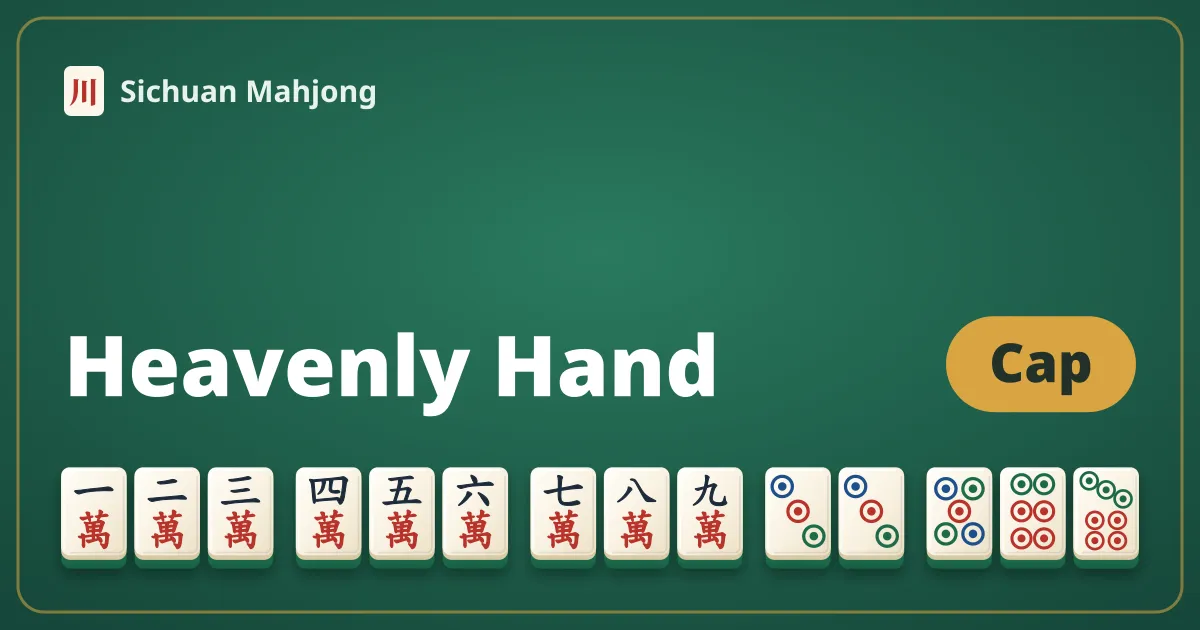
In Sichuan mahjong, the heavenly hand (天胡, tian hu) scores the cap straight away: after the three-tile exchange and the void, the dealer's 14 tiles are already a winning hand before a single discard. Whatever the pattern, it scores the cap of 4 fan: each player pays 16 units, plus the 1-unit self-draw bonus.
On this page
The rules for the heavenly hand
- Only the dealer can have it (only the dealer starts with 14 tiles)
- After the exchange and the void, before any discard, the 14 tiles are a winning hand
- None of the 14 may be from the void suit, so a heavenly hand uses at most two suits
- It counts as a self-draw: all three other players pay
How the heavenly hand is scored
The pattern doesn't matter — it goes straight to the cap. The two hands below are scored live by the same code the game uses (the self-draw bonus comes on top).
Self-drawn
| Heavenly hand (天胡) | Cap |
| Total Capped at 4 fan | 4 fan |
|---|---|
| Each payer pays 16 units | |
Units = 2 to the power of fan, up to the cap. Self-draw bonus and kong payments come on top.
Self-drawn
| Pure one suit (清一色) | 2 fan |
| Heavenly hand (天胡) | Cap |
| Total Capped at 4 fan | 4 fan |
|---|---|
| Each payer pays 16 units | |
Units = 2 to the power of fan, up to the cap. Self-draw bonus and kong payments come on top.
| Situation | Fan | Each player pays |
|---|---|---|
| Heavenly hand (default cap 4 fan) | 4 | 16 units, plus 1 self-draw bonus |
| Lowest cap in settings | 3 | the cap |
| Highest cap in settings | 6 | the cap |
You can change the cap in settings (3–6 fan), and the heavenly hand always follows it.
How it relates to other hands
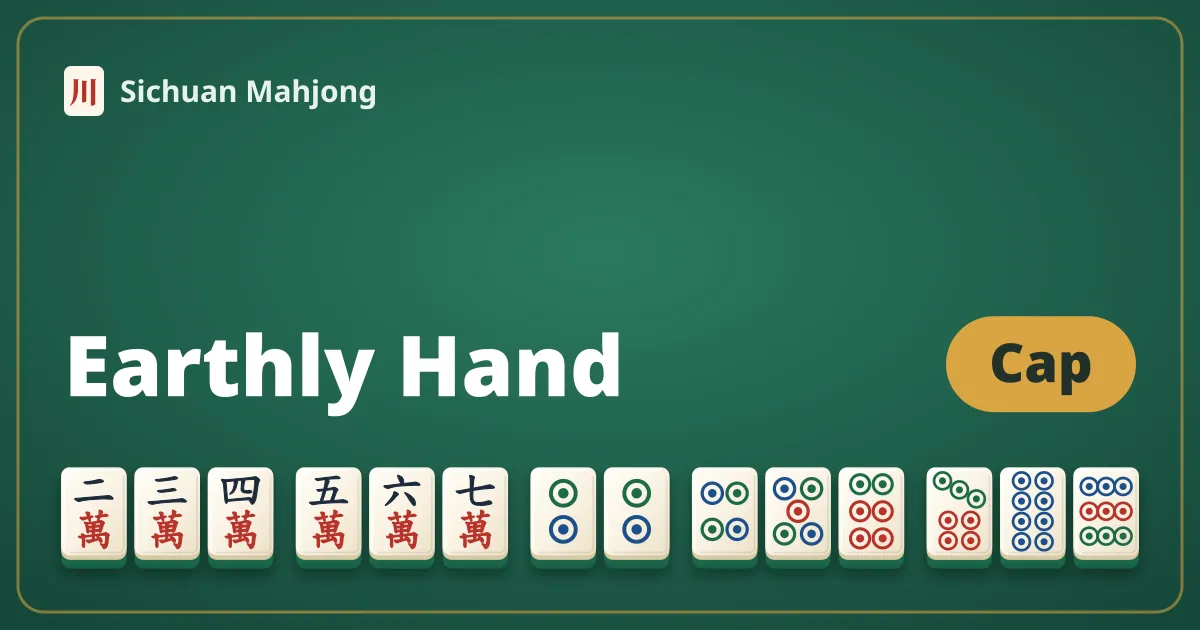
- Earthly hand: a non-dealer self-draws on their very first draw — also straight to the cap.
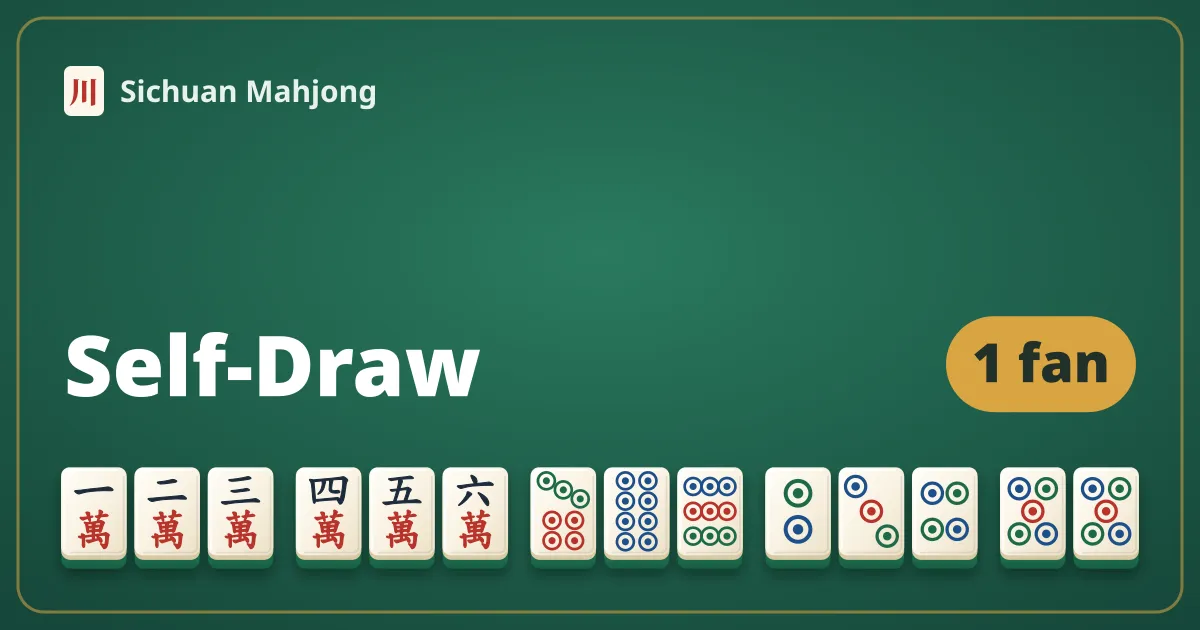
- Self-draw: the heavenly hand is a self-draw paid by all three; with the self-draw fan option it's already at the cap, so nothing more.
- Pattern fan: pure one suit, seven pairs, All Pungs, roots… none of them matter in a heavenly hand — the result is the cap.
Heavenly hand odds
How rare is it? We measured it two ways:
Pure chance: any 14 tiles
Drawing 14 random tiles from 108, 10,000,000 times: 0.0054% were already a winning hand (four sets and a pair, or seven pairs); adding Sichuan's "two suits at most" condition leaves 0.00091% — about once in 110,000.
Real play: after the exchange and the void
Real hands have the three-tile exchange: the dealer can pass on the three least useful tiles, often clearing out the third suit. We let the computers play the first round of 400,000 hands: the dealer had a heavenly hand 0.041% of the time — about once every 2,440 hands.
What to watch for
- Dealer, check first: after the exchange and the void, make sure your 14 tiles aren't already a win before choosing a discard.
- Pick the right void: you can only win with two suits; a third-suit tile among the 14 rules out the heavenly hand.
- It collects the cap: change the cap in settings and the heavenly hand changes with it.
To try it, open a table of online Sichuan mahjong — the computers play blood battle with you and count the fan for you.
The heavenly hand in other mahjong styles
- Taiwanese mahjong: 24 tai (Taiwanese mahjong scoring)
- Japanese mahjong ("Tenhou"): yakuman (Japanese mahjong yaku list)
- Hong Kong mahjong: a limit hand, straight to the maximum (Hong Kong mahjong fan list)
FAQ
How many fan is a heavenly hand?
The pattern doesn't matter; it scores the cap: 4 fan by default, so each player pays 16 units plus the 1-unit self-draw bonus.
Can a non-dealer get a heavenly hand?
No. Only the dealer starts with 14 tiles; a non-dealer self-drawing on their first draw is an earthly hand, also at the cap.
How rare is a heavenly hand?
Random 14 tiles make a Sichuan win about once in 110,000; with the exchange, real play gives a heavenly hand about once every 2,440 hands.
Do pure one suit or roots add to a heavenly hand?
No. A heavenly hand goes straight to the cap; pattern fan don't add on top.
Related hands
 Earthly Hand Cap
 Self-Draw 1 fan
Try it at the table
Sichuan Mahjong — Play Sichuan mahjong “blood battle” free in your browser against three computer opponents. 108 tiles, swap three, pick a void suit, pung and kong, and keep playing after someone wins. Automatic fan scoring, no sign-up.