Sichuan Mahjong · 3 fan
Dragon Seven Pairs (Long Qi Dui) in Sichuan Mahjong: Fan, Examples and Odds
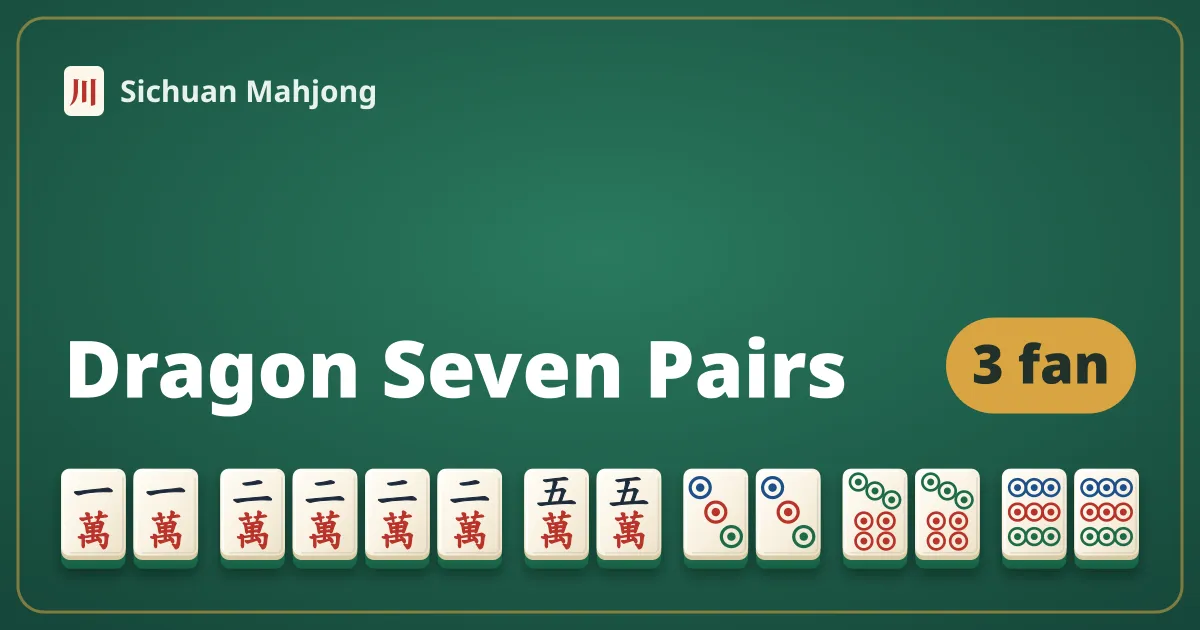
In Sichuan mahjong, Dragon Seven Pairs (龍七對, long qi dui) is worth 3 fan — each payer pays 8 units: you win with Seven Pairs, and one of the "pairs" is actually four identical tiles (counted as two pairs). It's one fan more than plain Seven Pairs, and one more fan on top usually reaches the cap.
On this page
The rules for Dragon Seven Pairs
- It must be Seven Pairs first: 14 tiles in seven pairs, fully concealed — no pungs or kongs
- At least one kind has all four copies in your hand (counted as two pairs)
- Those four can't be konged: a kong breaks concealment and the seven pairs
- Like every Sichuan win, you can't hold your void suit
How Dragon Seven Pairs waits
Like Seven Pairs, it is a single wait. The four of a kind can already be in your hand — or the winning tile can complete it.
Won on a discard
| Dragon seven pairs (龍七對) | 3 fan |
| Total | 3 fan |
|---|---|
| Each payer pays 8 units | |
Units = 2 to the power of fan, up to the cap. Self-draw bonus and kong payments come on top.
If you hold three of a kind while going for Seven Pairs, waiting on the fourth copy is a common choice: as long as one is still out there, winning on it is worth an extra fan.
How Dragon Seven Pairs is scored
Fan add up, and each extra fan doubles the payment, up to the cap of 4 fan. The hands below are scored live by the same code the game uses (the self-draw bonus and kong payments come on top).
Won on a discard
| Dragon seven pairs (龍七對) | 3 fan |
| Total | 3 fan |
|---|---|
| Each payer pays 8 units | |
Units = 2 to the power of fan, up to the cap. Self-draw bonus and kong payments come on top.
Won on a discard
| Dragon seven pairs (龍七對) | 3 fan |
| Root (根) | 1 fan |
| Total | 4 fan |
|---|---|
| Each payer pays 16 units | |
Units = 2 to the power of fan, up to the cap. Self-draw bonus and kong payments come on top.
Self-drawn
| Dragon seven pairs (龍七對) | 3 fan |
| Pure one suit (清一色) | 2 fan |
| Total Capped at 4 fan | |
|---|---|
| Each payer pays 16 units | |
Units = 2 to the power of fan, up to the cap. Self-draw bonus and kong payments come on top.
Common combinations:
| Combination | Fan | Each payer pays |
|---|---|---|
| Dragon Seven Pairs | 3 | 8 units |
| Double dragon (+ root) | 4 | 16 units |
| Pure dragon (+ pure one suit) | 5 | 16 units |
| Dragon Seven Pairs + deal-in after a kong | 4 | 16 units |
Under the default 4-fan cap, Dragon Seven Pairs needs just one more fan (a root, the self-draw fan option, a last-tile win, an after-kong deal-in…) to hit the cap; the pure version is already over it.
How it relates to other hands
- Seven Pairs: Dragon Seven Pairs replaces Seven Pairs' 2 fan — the two don't add together.
- Root: in a normal hand, four of a kind is a root; in Dragon Seven Pairs the first set of four is built in, and only the second one counts as a root.
- Pure One Suit: seven pairs from one suit with four of a kind is pure dragon seven pairs, over the default cap.
- All Pungs: with four of a kind, All Pungs wants you to kong; Dragon Seven Pairs says don't. Pick your road early.
Dragon Seven Pairs odds
How often it happens in normal play
In 40,000 hands of normal computer play, Dragon Seven Pairs is 0.45% of all wins, against 3.9% for plain Seven Pairs; Dragon Seven Pairs wins average 3.1 fan, and each payer pays 8.6 units on average.
Can you aim for Dragon Seven Pairs?
Hardly. Seven Pairs is already a single wait, and you also need all four copies of one tile. Even in the forced Seven Pairs simulation (the player with the most pairs must go for Seven Pairs — see the Seven Pairs page), only 3.6% of the finished hands were Dragon Seven Pairs.
Which hands suit Dragon Seven Pairs
- Three of a kind plus lots of pairs: go for Seven Pairs and wait on the fourth copy — drawing or claiming it makes the dragon.
- Don't rush to kong four of a kind: a kong collects kong money, but kills Seven Pairs; with five or more pairs already, keeping it for the dragon is usually worth more.
- Count what's left: if one copy of that tile is already discarded, the four can't come together — wait on something else.
To try it, open a table of online Sichuan mahjong — the computers play blood battle with you and count the fan for you.
Dragon Seven Pairs in other mahjong styles
Dragon Seven Pairs is a Sichuan speciality: Japanese mahjong's seven pairs doesn't allow four identical tiles, Taiwanese 16-tile mahjong has no seven pairs, and Guobiao's 24-fan seven pairs doesn't treat four of a kind differently. See the Japanese mahjong yaku list and the Guobiao fan list.
FAQ
How many fan is Dragon Seven Pairs?
In Sichuan mahjong Dragon Seven Pairs is worth 3 fan; each payer pays 8 units. Any one more fan takes it to the default cap of 4 fan.
Do the four identical tiles add a root?
No. The first set of four is part of Dragon Seven Pairs; only a second set of four adds a root.
Can you kong in Dragon Seven Pairs?
No. A kong breaks concealment and the seven pairs. Keep the four tiles in your hand as two pairs.
How many fan is pure dragon seven pairs?
Dragon Seven Pairs 3 plus pure one suit 2 is 5 fan — over the default cap, so it scores 4 fan and each payer pays 16 units.
Related hands
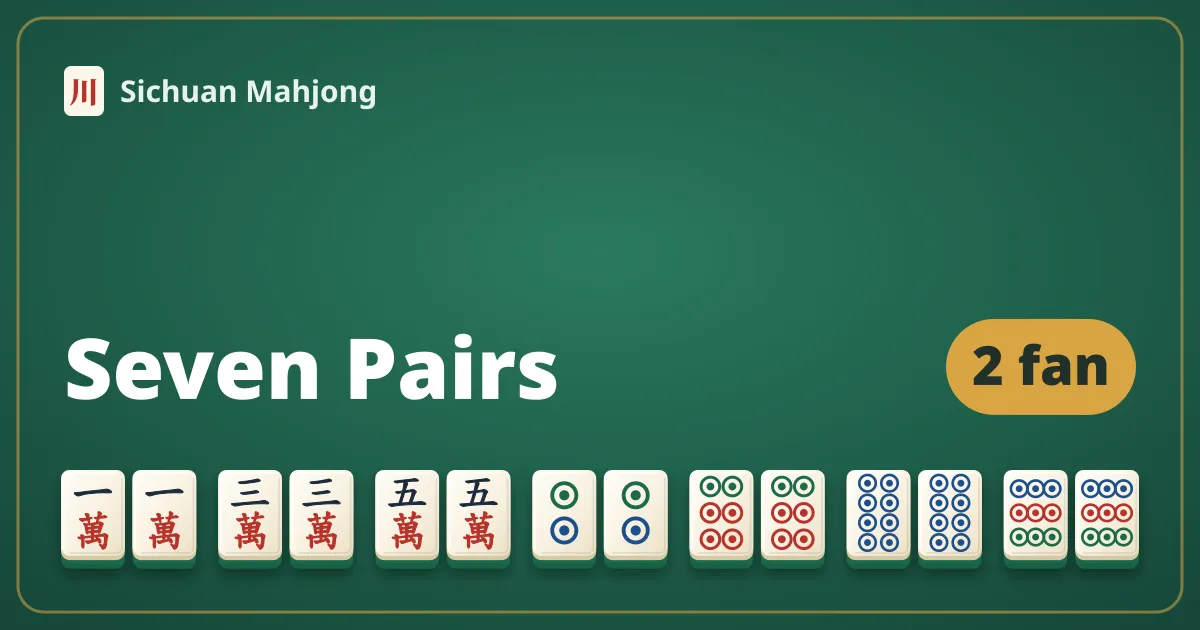 Seven Pairs 2 fan
Seven concealed pairs — 2 fan. Examples, four-of-a-kind, pure / dragon seven pairs, and how many pairs you need to go for it.
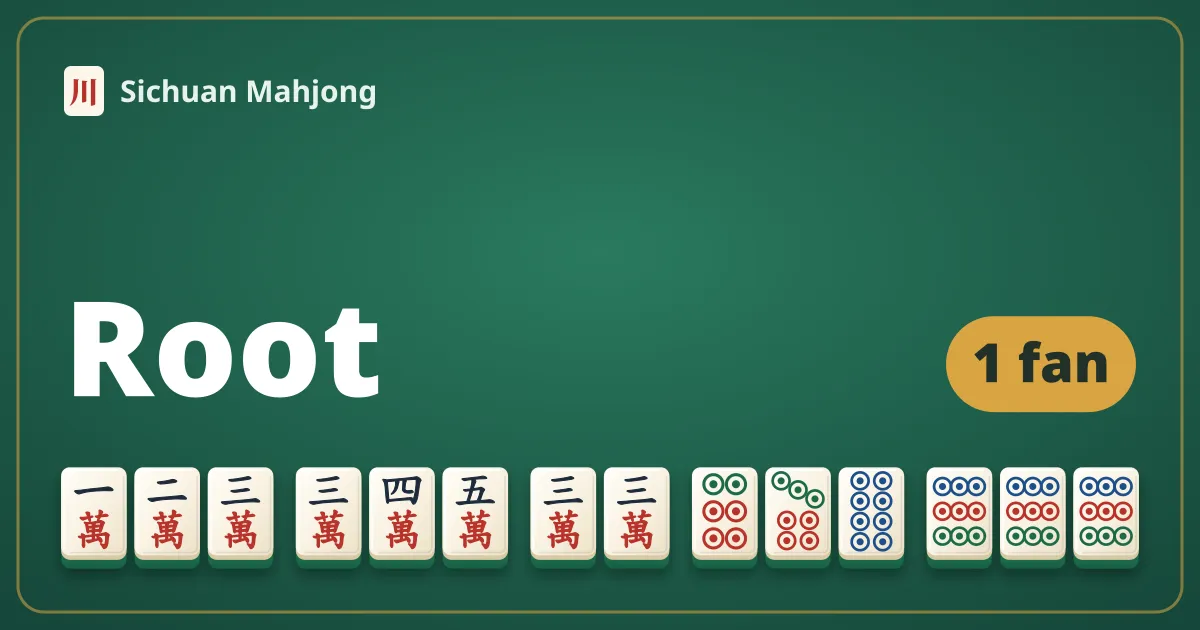 Root 1 fan
All four copies of a tile in your hand adds 1 fan: examples, no kong needed, stacking roots, and how common they are.
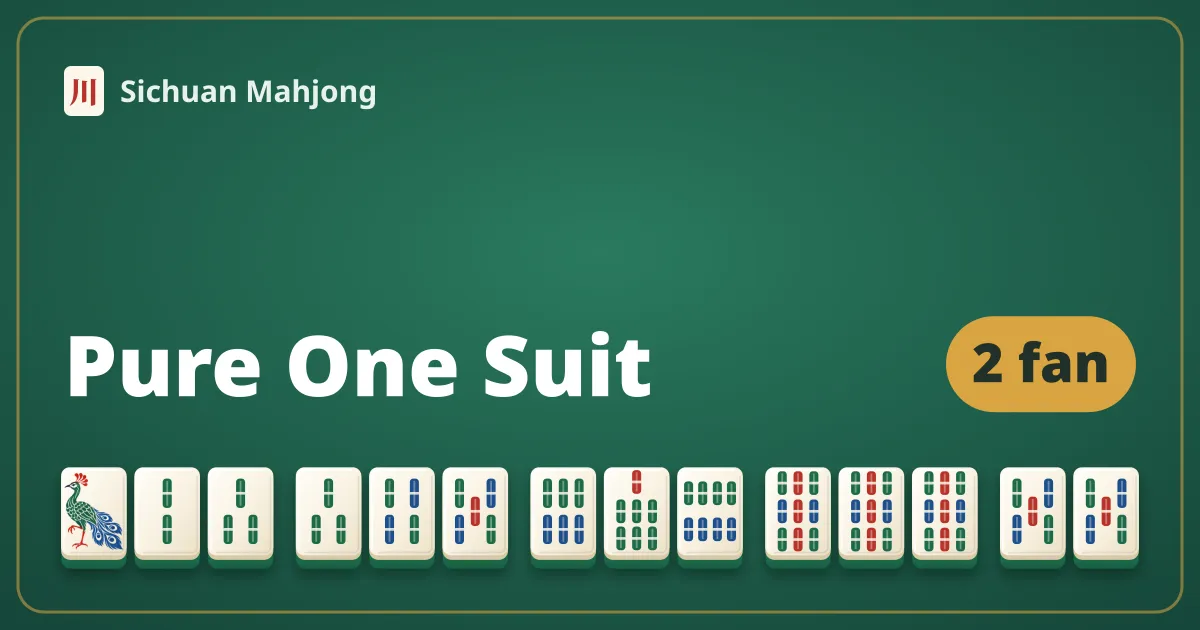 Pure One Suit 2 fan
Every tile from one suit — a 2-fan big hand. Examples, pure pungs / pure seven pairs, and how many tiles of one suit you need to go for it.
Try it at the table
Sichuan Mahjong — Play Sichuan mahjong “blood battle” free in your browser against three computer opponents. 108 tiles, swap three, pick a void suit, pung and kong, and keep playing after someone wins. Automatic fan scoring, no sign-up.