Sichuan Mahjong · 1 fan
Root (Gen) in Sichuan Mahjong: How It Scores, Examples and Odds
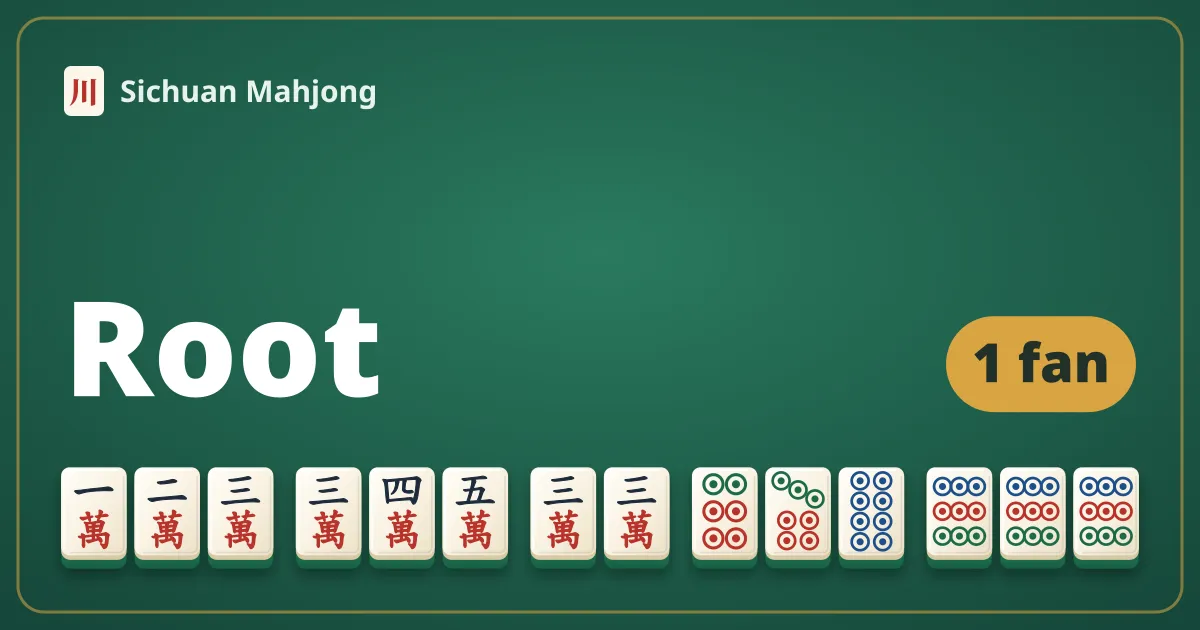
In Sichuan mahjong, a root (根, gen) is worth 1 fan each: when you win, every kind of tile with all four copies in your own hand (tiles in hand plus your punged and konged sets) adds a root. You can have several, one fan each, added straight to everything else. Sichuan has few scoring patterns, and the root is the fan that most often turns a small hand into a bigger one.
On this page
The rules for roots
- One kind with all four copies in your hand: four in hand, a kong, or a pung with the fourth copy kept in hand
- No kong needed: four copies split across sets (say two runs and a pair) still count
- One root per kind — as many kinds, as many roots
- In Dragon Seven Pairs the first four of a kind is part of the hand, so only a second one adds a root
Where roots come from
Kongs: the usual root
Exposed, upgraded or concealed — a kong is four tiles, so it always brings a root when you win.
Won on a discard
| Root (根) ×2 | 2 fan |
| Total | 2 fan |
|---|---|
| Each payer pays 4 units | |
Units = 2 to the power of fan, up to the cap. Self-draw bonus and kong payments come on top.
No kong: four tiles kept in hand
After a pung, drawing the fourth copy doesn't oblige you to upgrade; keeping it for a run still counts as a root:
Won on a discard
| Root (根) | 1 fan |
| Total | 1 fan |
|---|---|
| Each payer pays 2 units | |
Units = 2 to the power of fan, up to the cap. Self-draw bonus and kong payments come on top.
Not konging means nobody can rob the kong and you show less; the cost is no kong money and no replacement draw (no chance of a win after a kong).
How roots are scored
Fan add up, and each extra fan doubles the payment, up to the cap of 4 fan. The hands below are scored live by the same code the game uses (the self-draw bonus and kong payments come on top).
Won on a discard
| Root (根) | 1 fan |
| Total | 1 fan |
|---|---|
| Each payer pays 2 units | |
Units = 2 to the power of fan, up to the cap. Self-draw bonus and kong payments come on top.
Won on a discard
| All pungs (對對胡) | 1 fan |
| Root (根) | 1 fan |
| Total | 2 fan |
|---|---|
| Each payer pays 4 units | |
Units = 2 to the power of fan, up to the cap. Self-draw bonus and kong payments come on top.
Won on a discard
| Dragon seven pairs (龍七對) | 3 fan |
| Root (根) | 1 fan |
| Total | 4 fan |
|---|---|
| Each payer pays 16 units | |
Units = 2 to the power of fan, up to the cap. Self-draw bonus and kong payments come on top.
Common combinations:
| Combination | Fan | Each payer pays |
|---|---|---|
| One root | 1 | 2 units |
| Two roots | 2 | 4 units |
| All Pungs + root | 2 | 4 units |
| Pure one suit + root | 3 | 8 units |
| Win after a kong + root (the kong is the root) | 2 | 4 units |
How it relates to other hands
- Win after a kong: self-drawing your kong replacement — the kong itself is a root, so it's always at least 2 fan.
- All Pungs: punging and later upgrading to a kong is common, so All Pungs often carries a root.
- Dragon Seven Pairs: four of a kind in seven pairs makes the dragon; the first one isn't a root.
- Pure One Suit: with one suit concentrated, four of a kind comes together more easily.
Root odds
In 40,000 hands of normal computer play there were 0.7 kongs per hand on average, and 19% of all wins carried a root — the most common fan apart from plain hands. Exactly one root: 17% of wins; two or more: 1.5%. Wins with a root averaged 1.2 fan, with each payer paying 2.6 units.
| Hand | Share of wins |
|---|---|
| Plain hand (平胡) | 74% |
| Root (根) | 19% |
| Seven pairs (七對) | 3.9% |
| Pure one suit (清一色) | 1.4% |
| All pungs (對對胡) | 0.61% |
| Dragon seven pairs (龍七對) | 0.45% |
| Terminals in every set (全帶么) | 0.034% |
| Golden hook (金鉤釣) | 0.0035% |
| All 2-5-8 pungs (將對) | 0.00087% |
Source: 40,000 hands of computer play on this site (four normal-level players, 115,067 wins in total), cap 4 fan.
To kong or not
- Concealed kong: almost always. Each player pays 2 units on the spot ("rain"), the root still counts, and you get a replacement draw.
- Upgraded kong: check the table first — someone may be waiting on that tile. If they rob it, you lose the kong money and pay for their win.
- Exposed kong: the discarder pays 2 units. With three in hand and the fourth discarded, a kong means root plus kong money — but you can no longer use those three for runs.
- Don't kong when going for Seven Pairs: a kong breaks concealment; four kept in hand make Dragon Seven Pairs.
To try it, open a table of online Sichuan mahjong — the computers play blood battle with you and count the fan for you.
FAQ
How many fan is a root?
1 fan per root, so two roots are 2 fan. Totals above the 4-fan cap count as the cap.
Does it count without a kong?
Yes. As long as all four copies are in your own hand (four in hand, or a pung with the fourth kept), it's a root.
Do you still get a root after konging?
Yes. The kong money is paid on the spot; when you win, the kong also counts as a root.
Do the four tiles in Dragon Seven Pairs count as a root?
The first four are part of Dragon Seven Pairs and don't count again; a second set of four adds a root.
Related hands
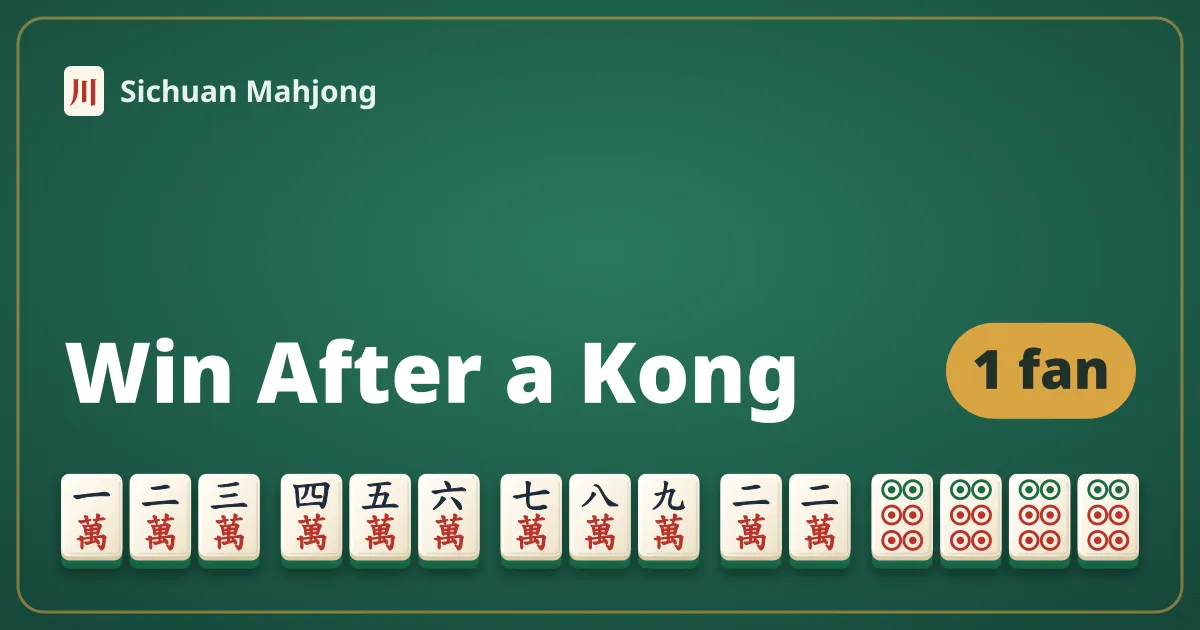 Win After a Kong 1 fan
Self-draw the kong replacement: 1 fan plus the root, at least 2 fan. Examples, who pays, and the odds per kong.
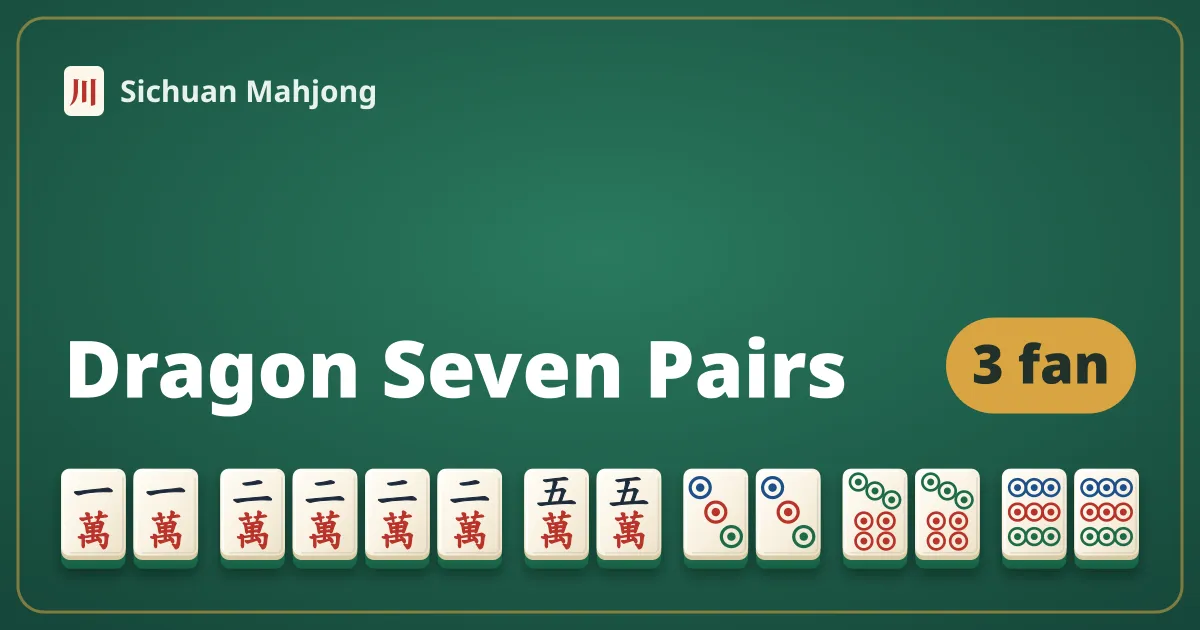 Dragon Seven Pairs 3 fan
Seven pairs with four of a kind — 3 fan. Examples, how roots work, double / pure dragon seven pairs, and how often it happens.
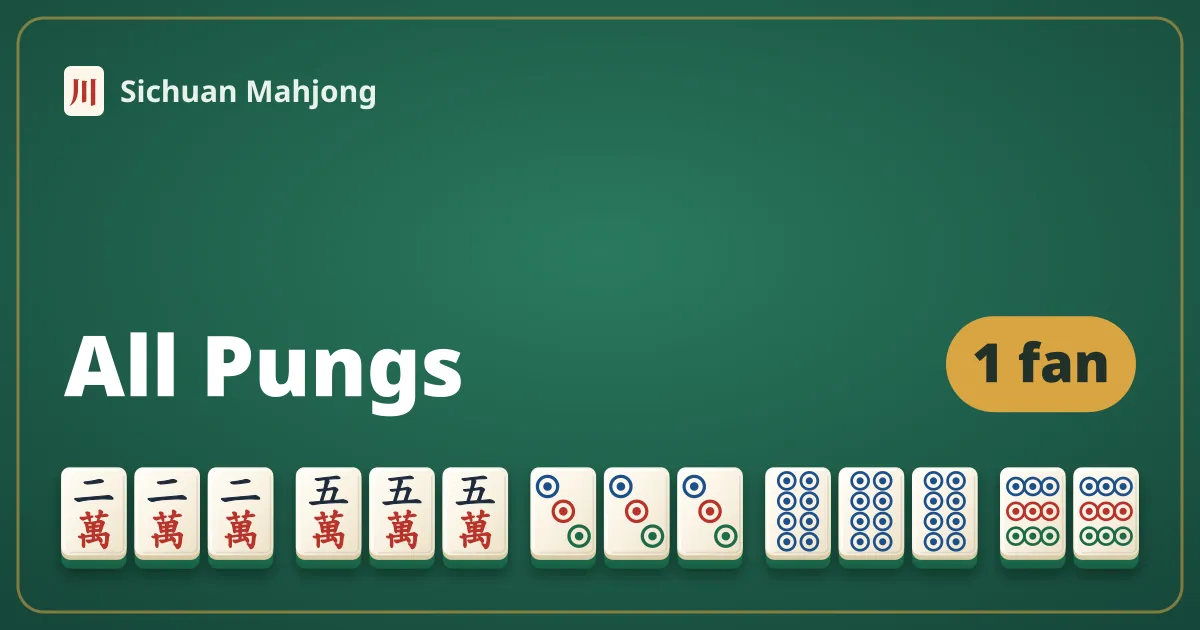 All Pungs 1 fan
Four pungs and a pair — 1 fan. Examples, 2-5-8 / golden hook / pure-pungs combos, and how many pairs you need to go for it.
Try it at the table
Sichuan Mahjong — Play Sichuan mahjong “blood battle” free in your browser against three computer opponents. 108 tiles, swap three, pick a void suit, pung and kong, and keep playing after someone wins. Automatic fan scoring, no sign-up.