Sichuan Mahjong · 1 fan
Last-Tile Self-Draw (Hai Di Lao Yue) in Sichuan Mahjong: Fan, Examples and Odds
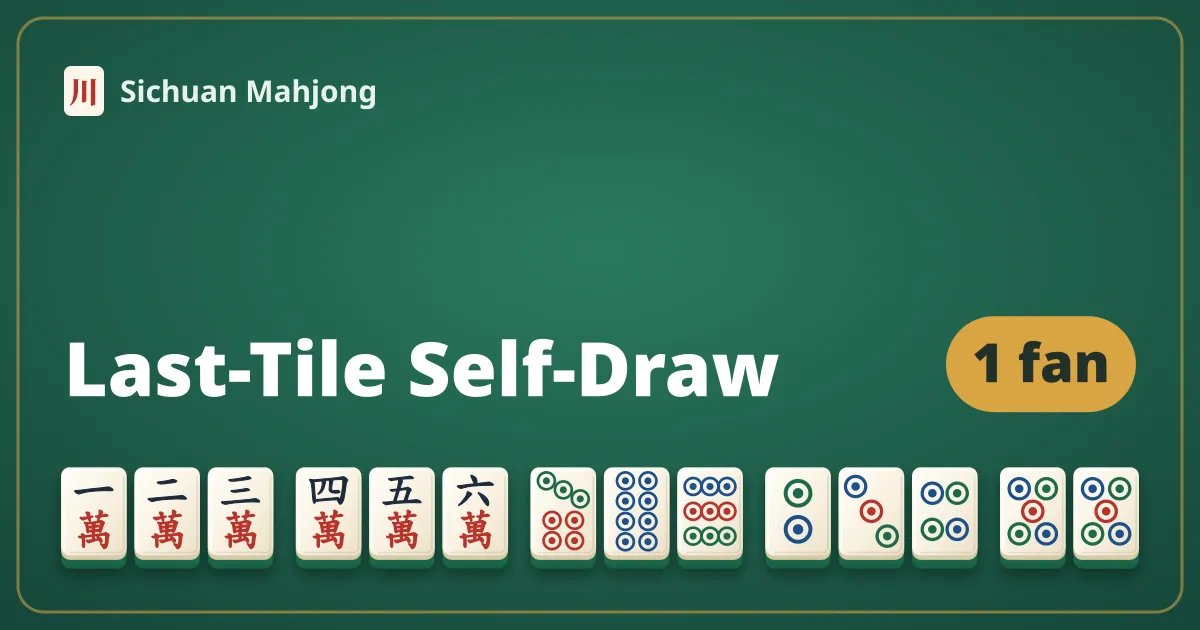
In Sichuan mahjong, the last-tile self-draw (海底撈月, hai di lao yue — "fishing the moon from the seabed") adds 1 fan: one tile is left in the wall, it's your turn to draw, and it completes your hand. Even a plain hand gets 1 fan, and each payer pays 3 units (including the self-draw bonus).
On this page
The rules for a last-tile self-draw
- You draw the last tile of the wall and self-draw with it
- If the last tile is a kong replacement it counts too, plus a win after a kong
- If someone else draws the last tile and you win on their discard, it's a last-tile discard instead
- Like every Sichuan win, you can't hold your void suit
After the last tile
When the wall runs out, the hand ends and the players who haven't won settle up:
- Flower-pig check: anyone still holding their void suit pays the cap to every player who isn't a flower pig
- Ready-hand check: players who aren't ready pay every ready player (by the best fan that player could win)
- Kong refund: players who aren't ready give back the kong money they collected this hand
So drawing the last tile without winning isn't neutral: not being ready costs money. A last-tile self-draw turns "about to be checked" into "collecting".
How a last-tile self-draw is scored
Fan add up, and each extra fan doubles the payment, up to the cap of 4 fan. The hands below are scored live by the same code the game uses (the self-draw bonus and kong payments come on top).
Self-drawn
| Last-tile self-draw (海底撈月) | 1 fan |
| Total | 1 fan |
|---|---|
| Each payer pays 2 units | |
Units = 2 to the power of fan, up to the cap. Self-draw bonus and kong payments come on top.
Self-drawn
| All pungs (對對胡) | 1 fan |
| Last-tile self-draw (海底撈月) | 1 fan |
| Total | 2 fan |
|---|---|
| Each payer pays 4 units | |
Units = 2 to the power of fan, up to the cap. Self-draw bonus and kong payments come on top.
Common combinations:
| Combination | Fan | Each payer pays (default: self-draw bonus) |
|---|---|---|
| Last-tile self-draw | 1 | 3 units |
| + root | 2 | 5 units |
| + All Pungs | 2 | 5 units |
| + pure one suit | 3 | 9 units |
| + win after a kong + root | 3 | 9 units |
How it relates to other hands
- Last-tile discard: after the last tile is drawn, the drawer's discard deals in — the winner adds 1 fan and only the discarder pays.
- Win after a kong: if the kong replacement is the last tile and you self-draw it, both fan add.
- Self-draw: a last-tile self-draw is a self-draw; with the self-draw fan option it adds another 1 fan.
- Plain hand: a plain hand on the last tile gets 1 fan, doubling each payment (self-draw bonus aside).
Last-tile self-draw odds
In 40,000 hands of normal computer play, 11% of hands reached the last tile (the rest ended earlier when three players had won); in those hands, the player drawing the last tile self-drew a win 7.7% of the time. Overall, last-tile self-draws were 0.30% of all wins, about once every 116 hands, averaging 1.6 fan.
| Bonus fan | Share of wins |
|---|---|
| Win after a kong (槓上開花) | 0.88% |
| Deal-in after a kong (槓上炮) | 1.3% |
| Robbing a kong (搶槓胡) | 0.18% |
| Last-tile self-draw (海底撈月) | 0.30% |
| Last-tile discard (海底炮) | 0.31% |
| Heavenly hand (天胡) | 0.019% |
| Earthly hand (地胡) | 0.03% |
Source: 40,000 hands of computer play on this site (four normal-level players, 115,067 wins in total), cap 4 fan.
Playing the last few tiles
- Work out who draws the last tile: tiles left and players still in tell you.
- Get ready first: not being ready at the end means paying in the ready-hand check; being ready keeps the last-tile self-draw alive.
- After drawing the last tile you still discard: if that tile deals in, it's a last-tile discard worth 1 fan more to the winner.
- No pungs or kongs once the wall is empty: the last discard can only be won on, not claimed.
To try it, open a table of online Sichuan mahjong — the computers play blood battle with you and count the fan for you.
Last-tile self-draw in other mahjong styles
- Taiwanese mahjong: 1 tai (Taiwanese mahjong scoring)
- Japanese mahjong ("Haitei Raoyue"): 1 han (Japanese mahjong yaku list)
- Hong Kong mahjong: 1 fan (Hong Kong mahjong fan list)
- Chinese Official (Guobiao): "Last Tile Draw", 8 fan — note that Guobiao's "hai di lao yue" means winning on the last *discard* (Guobiao fan list)
FAQ
How many fan is a last-tile self-draw?
It adds 1 fan to everything else; for a plain hand under the default rule each payer pays 3 units.
Does it have to be a self-draw?
Yes. Self-drawing the last tile is a last-tile self-draw; winning on the last discarded tile is a last-tile discard.
Does a kong replacement count as the last tile?
Yes — and it's a win after a kong as well, so both fan add.
Is there still a ready-hand check after a last-tile self-draw?
Yes. The wall is empty and the hand ends; players who haven't won still go through the flower-pig check, the ready-hand check and the kong refund.
Related hands
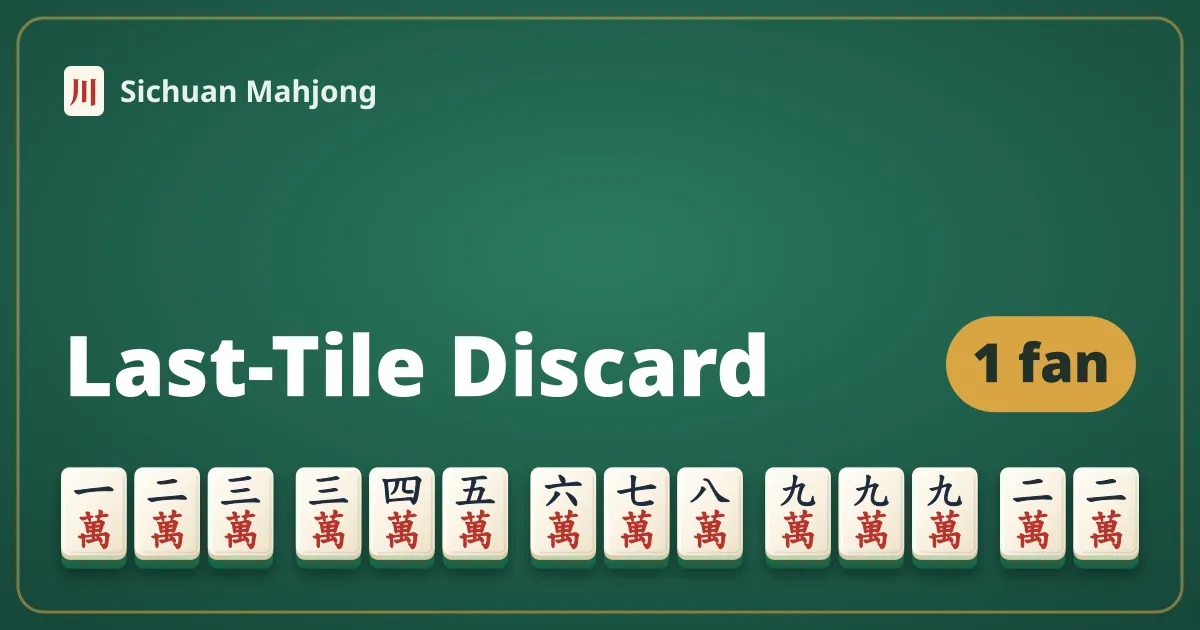 Last-Tile Discard 1 fan
The discard after the last tile deals in: 1 fan for the winner, paid by the discarder alone.
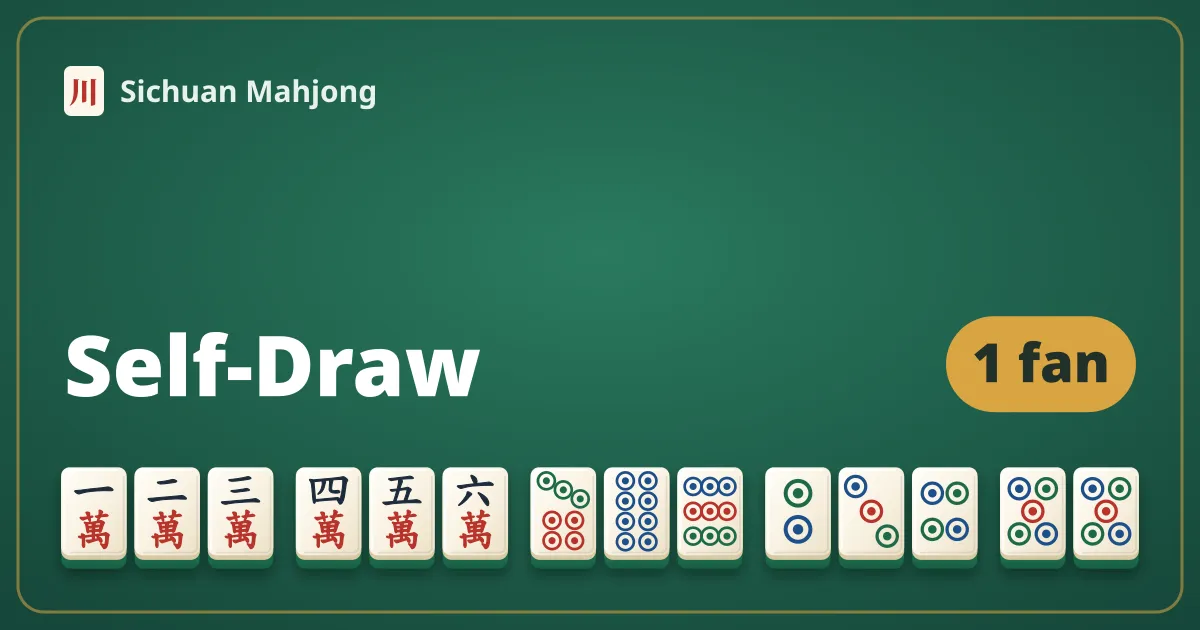 Self-Draw 1 fan
Everyone pays on a self-draw: the +1-unit bonus versus the +1-fan option, and how often wins are self-drawn.
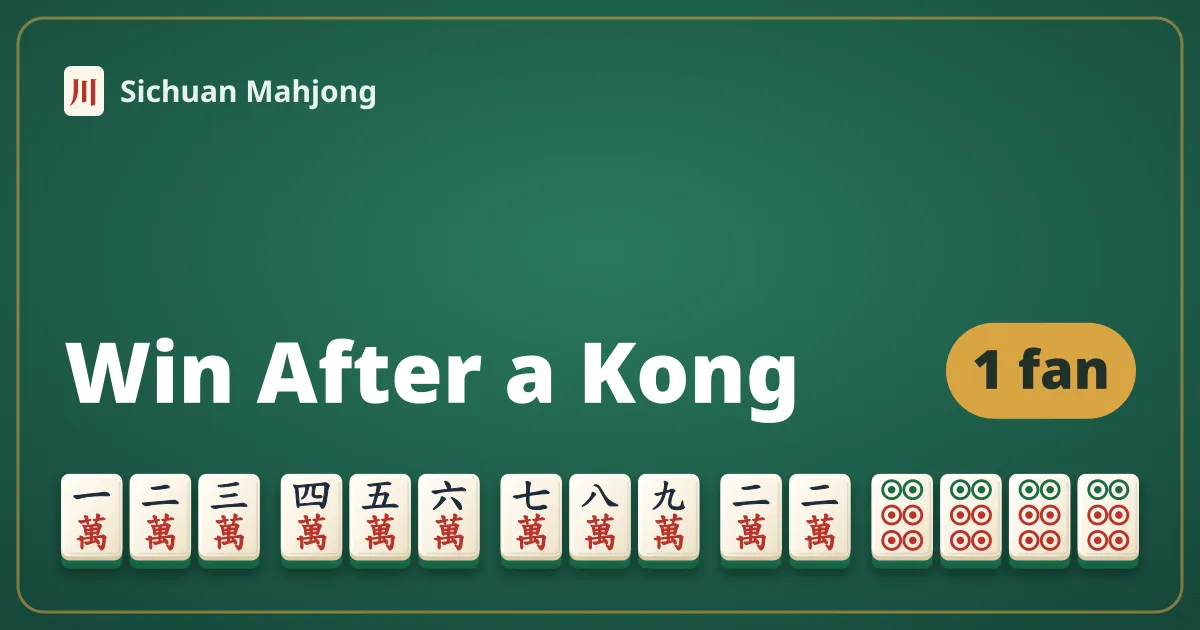 Win After a Kong 1 fan
Self-draw the kong replacement: 1 fan plus the root, at least 2 fan. Examples, who pays, and the odds per kong.
Try it at the table
Sichuan Mahjong — Play Sichuan mahjong “blood battle” free in your browser against three computer opponents. 108 tiles, swap three, pick a void suit, pung and kong, and keep playing after someone wins. Automatic fan scoring, no sign-up.